


2019.07.03 CoStone Capital Views:
On June 1, the twentieth CoStone Master Forum themed with "Economic Transformation & Business Revolution" kicked off at the world's highest concert hall the Sky Concert Hall, located at the T7 building of One Shenzhen Bay in Shenzhen. Dr. Jia Kang and six other speakers from the academic and business circles were invited to share their views on business revolution.
On June 1, the twentieth CoStone Master Forum themed with "Economic Transformation & Business Revolution" kicked off at the world's highest concert hall the Sky Concert Hall, located at the T7 building of One Shenzhen Bay in Shenzhen. Dr. Jia Kang and six other speakers from the academic and business circles were invited to share their views on business revolution.
Dr. Jia Kang, Chief Economist of the China Academy of New Supply-side Economics and Former Director of the Chinese Academy of Fiscal Sciences, and Mr. Chen Weiru, Director of Alibaba Industry Internet Research Center and Professor at Hupan University, made the opening speeches. Later, Zhang Wei, Chairman of CoStone Capital, Xu Hang, Chairman of the Board of Parkland Group, Xu Dingbo, Professor and Deputy Provost at the China Europe International Business School (CEIBS), and representatives of CEIBS CEO Class 5, including Chen Fashu, Chairman of New Huadu and Yunnao Baiyao Group, Wang Shuifu, Chairman of Xizi UHC, and Jiang Xipei, Chair of the Board of Far East Holding Group, gave speeches on relevant topics.
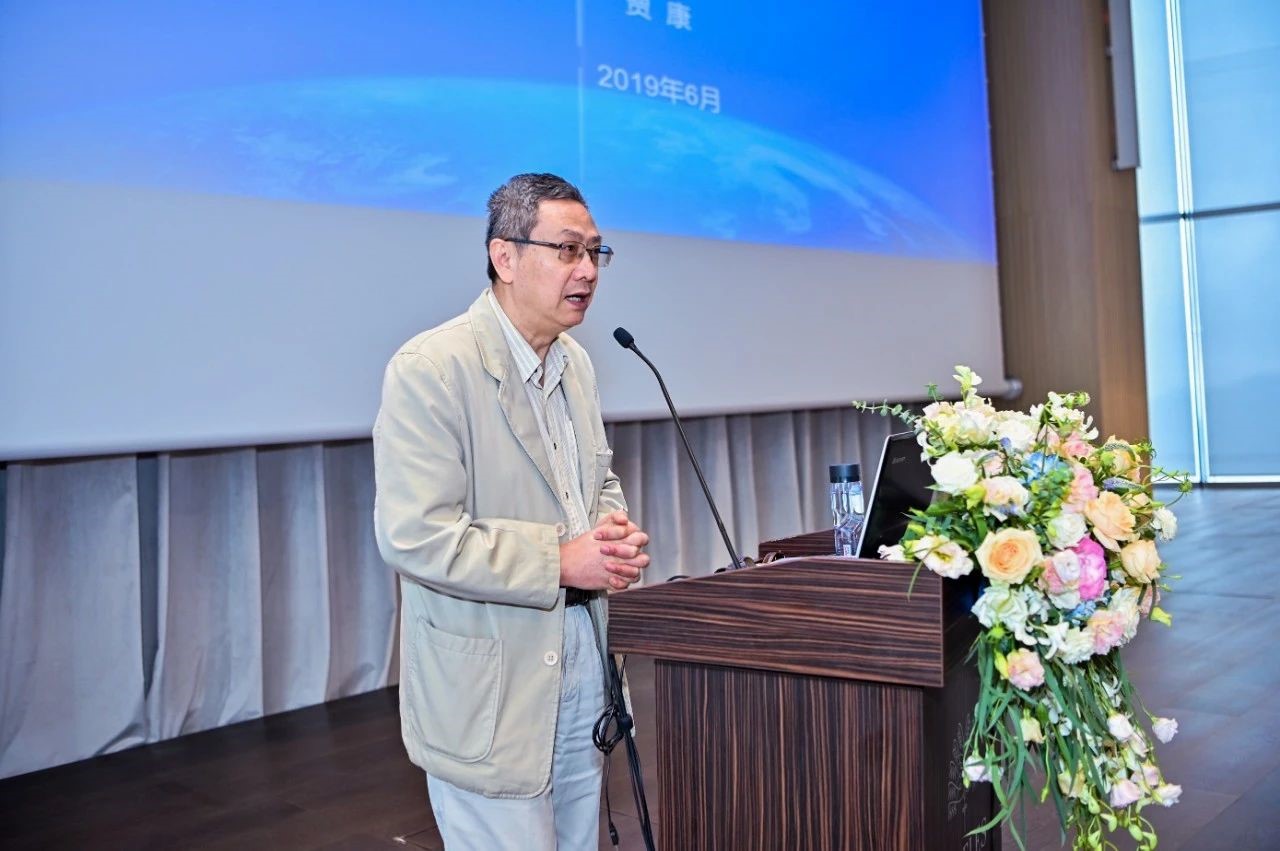
Dr. Jia Kang on The Current Economic Situation & The Global Trend and Corporates' Opportunities
Dr. Jia made an in-depth analysis of the current economic situation, the global trend and corporates' opportunities. His speech consisted of four parts: the change in China's principal contradiction and the supply-side structural reform; China's macro economy and feasible approaches to the development; China's relations with the international community and how to handle Sino-US relations; corporates' ways of investing under the New Normal.
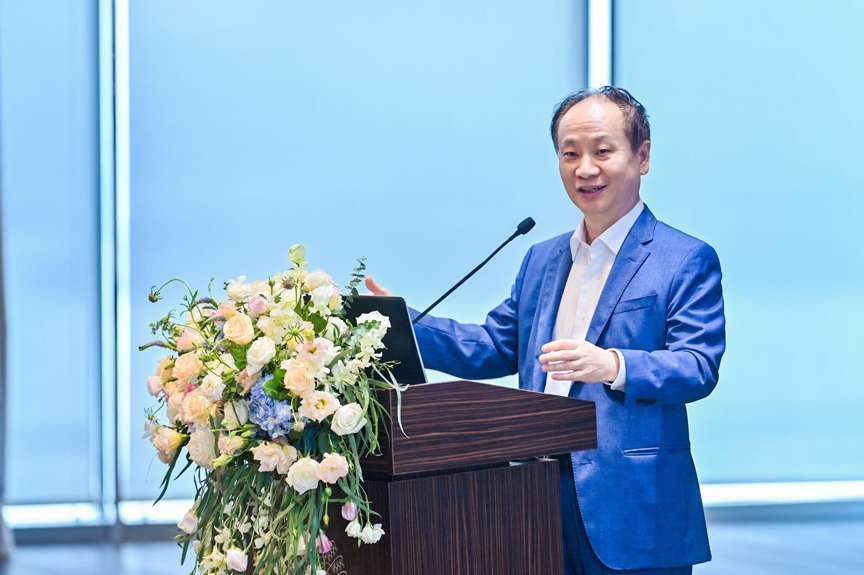
Xu Hang making an opening speech
After looking back on how he started Mindray and Parkland, Mr. Xu offered his insights into the development of China and enterprises, and the trade war between China and the United States. In his opinion, the reform and opening up, the market economy and the government's support for people pursuing a better life have made China's success. He stressed that to start a business, one must stay optimistic, have a vision, and dare to take risks.
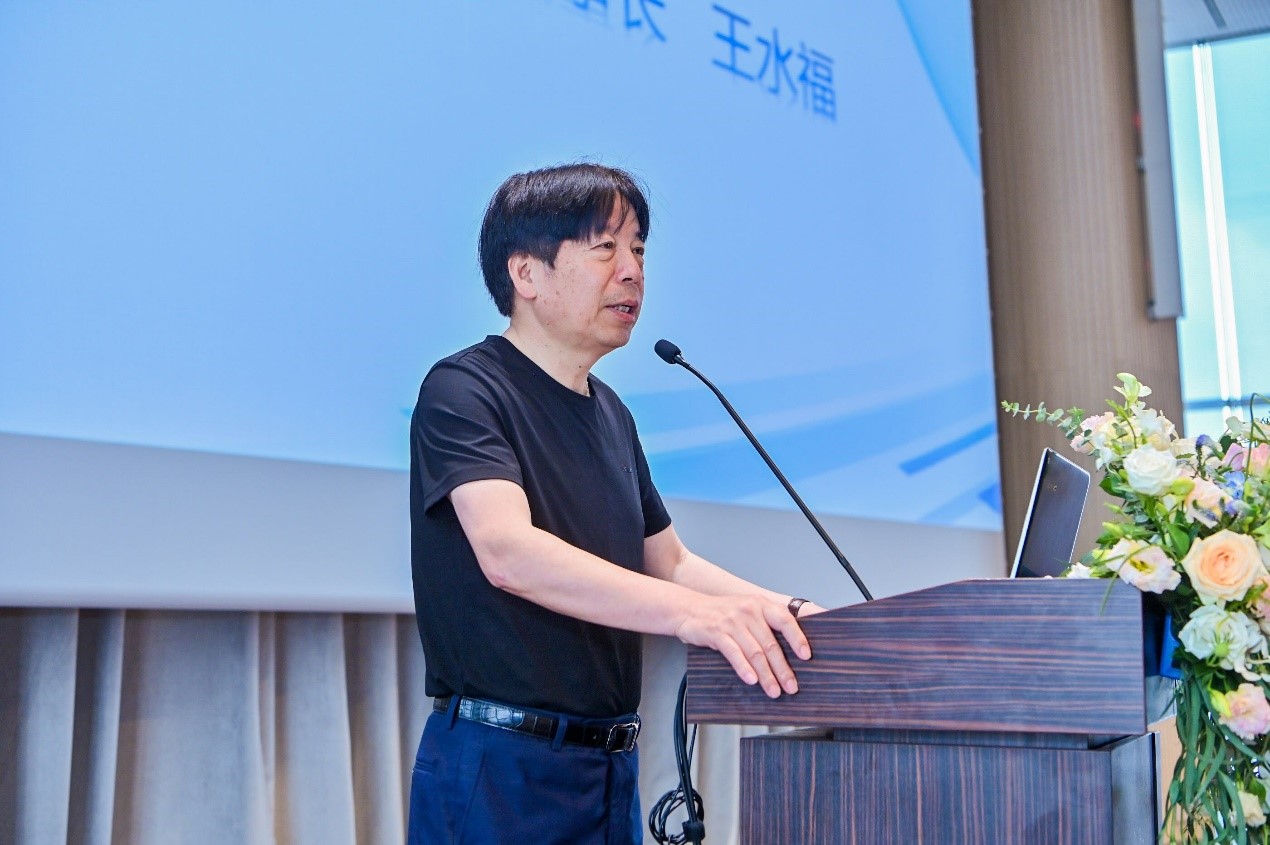
Wang Shuifu making a speech
Mr. Wang told his story of producing farm machinery parts and of how he ended up making aircraft parts, including those of COMAC(C919), Airbus, Boeing and Bombardier. As he said, the aviation industry, which seems to be an industry with enormous risks, is actually a very safe one as it has extremely strict requirements for product quality. He also pointed out that China should learn from Japan and Korea and create national automobile brands to upgrade the manufacturing industry. Jiangsu, Zhejiang and Shanghai’s rich resources could be fully utilized for building such a high-end national automobile brand, said Mr. Wang.
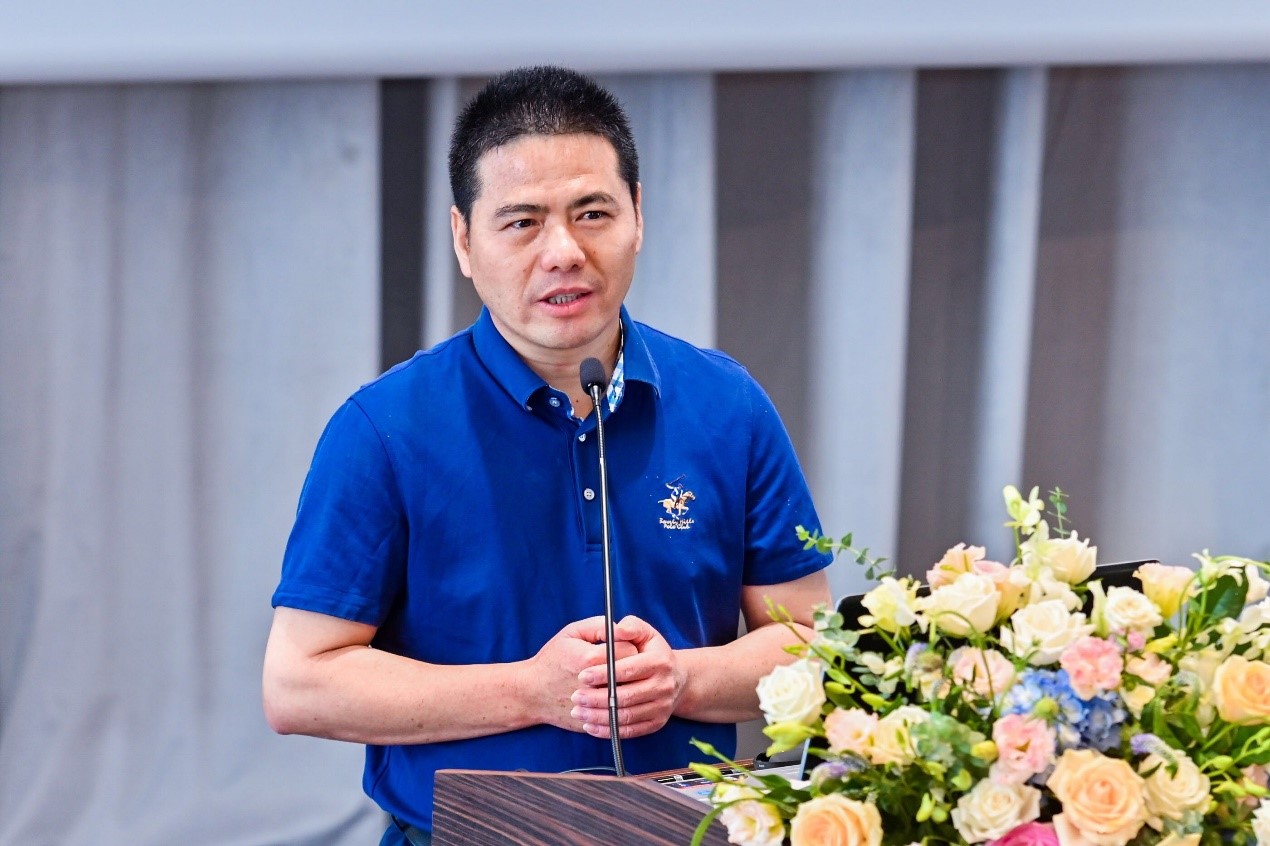
Jiang Xipei making a speech
Mr. Jiang expressed his thoughts on the new era. He held the belief that the competition among entrepreneurs would take up a large part of the competition in the future and that the Chinese government should give strong support to excellent Chinese enterprises in taking part in global competition. To put it specifically, private companies should be empowered, strong measures against fake and shoddy goods should be taken, and taxes and fees imposed on enterprises should be reduced. In the new era of commerce, entrepreneurs and individuals must establish a new commercial civilization, do good for others, which will in return give back benefits, build up confidence, and uphold a strong belief, added Mr. Jiang.
Speaker
Dr. Jia Kang
Dr. Jia Kang is a member of the National Committee of the CPPCC, and Distinguished Professor at Peking University, the Remin University of China and Wuhan University. Supported by the Heinz Program, he served as Visiting Professor at the University of Pittsburgh for one year in 1988. He is also the recipient of the Sun Yefang Economics Prize, the Mundell-Huangda Prize and the China Soft Science Prize. He once held the position of Director of the Chinese Academy of Fiscal Sciences for a long time. In 2013, Dr. Jia, acting as Director and Secretary General, initiated and set up the China Academy of New Supply-side Economics and the China New Supply-side Economist 50 Forum, aiming for building a think tank and a platform for interdisciplinary and cross-department academic exchanges.
Prof. Chen Weiru
Holding a PhD in Strategic Management from Purdue University, Dr. Chen Weiru is Professor of Strategy at CEIBS. Dr. Chen's interest areas of teaching include industry and competition analysis, business model innovation, and strategy of China. Before joining CEIBS, he taught strategy at INSEAD. He earned the Best Teaching Prize from the Krannert School of Management, Purdue University in 2002, the INSEAD MBA's Best Teacher Award in 2005, the INSEAD Deans' Commendation for Excellence in Teaching in 2011, and the CEIBS Best Teaching Prize in 2013.
Xu Hang
After graduating from the Department of Computer Science, Tsinghua University, Xu Hang was admitted to the Department of Electrical Engineering for studying biomedical engineering in 1984, and then he obtained his EMBA from CEIBS in 2002. He is the recipient of the 2005 Shenzhen Mayor Award and the initiator of Pengrui Qihang Public Welfare Foundation. Xu Hang used to be Chairman of Mindray and now he has joined Parkland Group as Chairman of the Board. He is also a member of the Governing Board of the Chinese University of Hong Kong, Shenzhen. Xu Hang ranked the fourth on the Forbes China's List of China's 50 Richest People in Healthcare with a fortune of $16.3 billion on August 3, 2020.
Wang Shuifu
Being an ordinary worker at the beginning, Wang Shuifu now is Chairman of Xizi UHC, Member of the Council of the China Elevator Association, and Deputy to the 13th People's Congress of Zhejiang Province. He ranked the 531th on the 2019 LEXUS•Hurun China Rich List with a fortune of ¥7.5 billion (approx. $1.15 billion) and the 2276th on the Hurun Global Rich List 2020 with a fortune of ¥8 billion (approx. $1.2 billion).
Prof. Xu Dingbo
Xu Dingbo is Professor of Accounting and Deputy Provost at CEIBS and Secretary General of the CEIBS Education Development Foundation. Prof. Xu once joined PICC as Director of the Board. Now he holds positions of Vice Chairman of the China Association of Chief Financial Officers and Executive Director of the Editorial Board of China Management Accounting Review.
Chen Fashu
Chen Fashu is the founder and Chairman of New Huadu, Vice Chairman of Wuyishan Travel, Chairman of Zijin Mining, and Honorary Member of the Board of Peking University. He ranked the 77th on the 2020 New Fortunes 500 Richest Chinese People List with a fortune of ¥30.05 billion (approx. $4.58 billion).
Jiang Xipei
Jiang Xipei is Chair of the Board of Far East Holding Group, a senior economist, Deputy to the 16th CPC National Congress, and Vice Chairman of the Global Alliance of SMEs, the Asian Manufacturing Association and the China Enterprise Directors Association. He is the recipient of the titles of Top 10 Private Entrepreneurs in China and Champion in China's Industrial Sector.
Rewritten by Jiang Xiaomei, Edited by Li Yunzhen, Du Zhixin
Over the past year, the bull market returned, with technology leading the way.
As I said back in October 2024, the rally that began on September 24 was not merely a rebound, but a reversal. Since then, China's capital markets have undergone a broad revaluation, moving from undervaluation toward fair value.
The Shanghai Composite Index reached its highest level in a decade. The "Yi-Zhong-Tian" trio—Eoptolink, Zhongji Innolight and TFC Communication, three prominent Chinese optical communications stocks—saw their share prices multiply severalfold in a single year. Cambricon's market capitalization briefly exceeded RMB 600 billion. Elsewhere in the technology sector, triple-digit price-to-earnings ratios and valuations exceeding RMB 10 billion became commonplace.
Some investors were greedy; others, fearful. Still others asked me: Are technology stocks in a valuation bubble?
My answer is that what we are witnessing is the hunger and anxiety of an era, reflected in the capital markets. Once you understand this, the current fervor for technology investing is no longer difficult to explain.
Investment has nothing to do with macroeconomics, but everything to do with geopolitics.
China-US relations will shape the investment landscape for decades to come. Geopolitics has played a major role in shaping the hunger and anxiety of our times, fundamentally reshaping the way we invest.
What, then, lies at the heart of China's hunger and anxiety?
The Fourth Industrial Revolution is already underway, yet China has not fully overcome the technological shortcomings left by the Third. There is no time to lose.
This is why some people wonder: Why do Chinese computing chip companies command such high valuations when their technologies still lag so far behind NVIDIA's? Why does NVIDIA trade at just 50 times earnings, while a company hailed as "China's answer to NVIDIA" commands a multiple of 300?
To me, this gets the logic exactly backward.
It is precisely because these companies cannot catch up with NVIDIA in the near term that they command a higher strategic premium. The wider the technological gap, the greater the strategic value.
The further something lies beyond our reach, the stronger our hunger. The harder it is to catch up, the deeper our anxiety. If China were to achieve a complete breakthrough in computing chips one day, valuations might actually come down.
Where can one find China's most spectacular natural landscapes?
Much of the answer, I believe, lies in and around the Hengduan Mountains: the Meili Snow Mountains, Jade Dragon Snow Mountain, Mount Gongga, Mount Siguniang, Jiuzhaigou, and many others. Vast differences in elevation and deep fault lines have given rise to landscapes of extraordinary grandeur.
Hard-tech investing follows a similar logic.
Technological gaps, discontinuities in capabilities, and missing links in industrial systems: a leap in difficulty brings a leap in valuation, and a successful breakthrough can, in turn, bring a leap in returns.
This logic extends well beyond computing chips. It is equally evident in memory semiconductors, commercial spaceflight, and other sectors where China still faces substantial technological gaps with other countries.
It was precisely this conviction that led CoStone Capital, starting in 2016, to decisively focus its investments on three areas: hard tech, emerging industries, and life sciences and healthcare. In this context, "hard tech" refers specifically to important industries in which China faces a technological gap with the United States.
Thanks to this forward-looking strategy, CoStone Capital established an early presence across the full value chains of key sectors, including semiconductors, artificial intelligence, and robotics.
Looking ahead, the frontiers of technological progress and industrial upgrading are boundless. Nor can the gaps in hard technology be closed overnight. The twin windows of opportunity presented by technological innovation and the development of homegrown alternatives to foreign technologies have only just begun to open.
The road ahead is long, but the future holds immense promise.
As an investment firm, CoStone Capital will continue to invest where the hunger and anxiety of each era run deepest, move forward with the tensions that shape our times, and extend our reach toward the most challenging—and most important—frontiers.
Spring 2026