

.png)
2013.07.24
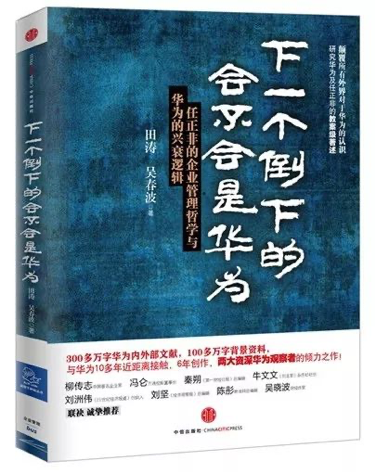
By Tian Tao, Wu Chun Bo
Ren ZhengFei, founder and CEO of Huawei, brought success to Huawei, thanks to his extraordinary management philosophy. Huawei is now growing into a world giant which catches the world’s attention. The success of Huawei is enlightening for enterprises to march forward under a more intricate economic and political landscape. This book can be the Bible of whom wants to learn about Huawei. Nine chapters display the evolution of Huawei and reveal Ren Zhengfei’s management philosophy. How can Huawei become what it is today? The readers can find the answer in this book. Liu Chuanzhi, founder of Lenovo, believed that it was the most comprehensive book about Huawei.

By Chiang Xun
Tang Dynasty has been a cradle of outstanding poems and home to many great poets in history, like Li Bai, Du Fu and Wang Wei. In this book, the author explains his favorite 100 Tang poems and poets in ten chapters. From Wei and Jin Dynasties to late Tang Dynasty, literature to aesthetics, Zhang Ruoxu to Li Shangying (famous poets), he uses poetic and meaningful words to whisper the basics poems and stories of poets. Readers thus can enjoy the beauty of poems between the lines.
Song poems are of great significance in the Chinese literature history. The author shapes this great chapter of Chinese literature, the Song poems, with his own brilliant storytelling. Readers are able to appreciate elegance, transcendence and courage beneath the Song poems from Five Dynasties and Ten Kingdoms period, to the Southern Song Dynasty and Northern Song Dynasty. Reading Song poems feels like tasting the bittersweet, loneliness, joy and satisfaction in life. When emotions roll over you, you are able to balance the gains and losses and heal yourself between the lines.
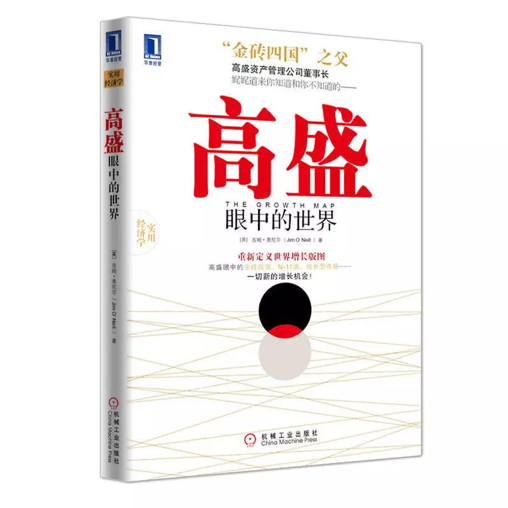
By Jim O’Neill
In this groundbreaking work of investment guidance, The Growth Map features Jim O’Neill’s personal account of the BRIC concept and how it has evolved. O’Neill offers a new definition for those potential markets like the BRICs and the “Next Eleven” countries (Bangladesh, Egypt, Indonesia, Iran, Mexico, Nigeria, Pakistan, Philippines, South Korea, Turkey, and Vietnam). The Growth Map is an indispensable guide for every investor and participant in the global economy. Anyone who wants to understand the developing world would do well to heed the man called "one of the most sought-after economic commentators on the planet.”

By Armand M. Nicholi. Jr.
“Know yourself”, a proposition of Socrates, has been haunting one generation after another. Overwhelmed by the chores in life, how can we ever reflect ourselves and grasp the true meaning of living? In The Question of God: C.S. Lewis and Sigmund Freud Debate God, Love, Sex, and the Meaning of Life, Dr. Nicholi presents the writings and letters of Lewis and Freud, allowing them to “discuss” on the subjects like morality, happiness, love, sex, death and God. Their answers toward the essential questions in life have been the most influential and contradictory, which reveal people’s pursuit for the ultimate meaning of life and struggles. Although the two masters represent different meanings of happiness, Dr. Nicholi manages to combine these arguments and poses a new way of reflection.
Rewritten by: Luo Xinying, Edited by: Du Zhixin, Wei Yiyi
Over the past year, the bull market returned, with technology leading the way.
As I said back in October 2024, the rally that began on September 24 was not merely a rebound, but a reversal. Since then, China's capital markets have undergone a broad revaluation, moving from undervaluation toward fair value.
The Shanghai Composite Index reached its highest level in a decade. The "Yi-Zhong-Tian" trio—Eoptolink, Zhongji Innolight and TFC Communication, three prominent Chinese optical communications stocks—saw their share prices multiply severalfold in a single year. Cambricon's market capitalization briefly exceeded RMB 600 billion. Elsewhere in the technology sector, triple-digit price-to-earnings ratios and valuations exceeding RMB 10 billion became commonplace.
Some investors were greedy; others, fearful. Still others asked me: Are technology stocks in a valuation bubble?
My answer is that what we are witnessing is the hunger and anxiety of an era, reflected in the capital markets. Once you understand this, the current fervor for technology investing is no longer difficult to explain.
Investment has nothing to do with macroeconomics, but everything to do with geopolitics.
China-US relations will shape the investment landscape for decades to come. Geopolitics has played a major role in shaping the hunger and anxiety of our times, fundamentally reshaping the way we invest.
What, then, lies at the heart of China's hunger and anxiety?
The Fourth Industrial Revolution is already underway, yet China has not fully overcome the technological shortcomings left by the Third. There is no time to lose.
This is why some people wonder: Why do Chinese computing chip companies command such high valuations when their technologies still lag so far behind NVIDIA's? Why does NVIDIA trade at just 50 times earnings, while a company hailed as "China's answer to NVIDIA" commands a multiple of 300?
To me, this gets the logic exactly backward.
It is precisely because these companies cannot catch up with NVIDIA in the near term that they command a higher strategic premium. The wider the technological gap, the greater the strategic value.
The further something lies beyond our reach, the stronger our hunger. The harder it is to catch up, the deeper our anxiety. If China were to achieve a complete breakthrough in computing chips one day, valuations might actually come down.
Where can one find China's most spectacular natural landscapes?
Much of the answer, I believe, lies in and around the Hengduan Mountains: the Meili Snow Mountains, Jade Dragon Snow Mountain, Mount Gongga, Mount Siguniang, Jiuzhaigou, and many others. Vast differences in elevation and deep fault lines have given rise to landscapes of extraordinary grandeur.
Hard-tech investing follows a similar logic.
Technological gaps, discontinuities in capabilities, and missing links in industrial systems: a leap in difficulty brings a leap in valuation, and a successful breakthrough can, in turn, bring a leap in returns.
This logic extends well beyond computing chips. It is equally evident in memory semiconductors, commercial spaceflight, and other sectors where China still faces substantial technological gaps with other countries.
It was precisely this conviction that led CoStone Capital, starting in 2016, to decisively focus its investments on three areas: hard tech, emerging industries, and life sciences and healthcare. In this context, "hard tech" refers specifically to important industries in which China faces a technological gap with the United States.
Thanks to this forward-looking strategy, CoStone Capital established an early presence across the full value chains of key sectors, including semiconductors, artificial intelligence, and robotics.
Looking ahead, the frontiers of technological progress and industrial upgrading are boundless. Nor can the gaps in hard technology be closed overnight. The twin windows of opportunity presented by technological innovation and the development of homegrown alternatives to foreign technologies have only just begun to open.
The road ahead is long, but the future holds immense promise.
As an investment firm, CoStone Capital will continue to invest where the hunger and anxiety of each era run deepest, move forward with the tensions that shape our times, and extend our reach toward the most challenging—and most important—frontiers.
Spring 2026