

.png)
2016.01.29
Happy New Year to all the friends of CoStone Capital!
The most beautiful moments always seemed to accelerate and slip beyond one’s grasp. It was not until the Spring Festival did we realize a year had passed. We should make use of the spring break to read more masterpieces and reflect our lives.
We should get rid of materialism. Erich Fromm once said, “Greed is a bottomless pit which exhausts the person in an endless effort to satisfy the need without ever reaching satisfaction.” People crave for wealth, reputation and high position which represent the universal pursuits of life. Once emperors enjoyed endless fame and enormous wealth for hundreds of years, but ended up nothing. Our ignorance of life and fate will drown ourselves in those universal pursuits. Reading and artist competence can fail us, too. Poets, calligraphers, pianists and philosophers can kill as well. Then How to live a meaningful life?

I’m Going to Retire on Mars is a biography of Elon Musk, CEO of Tesla. This book records how Musk’s became a symbol of success and miracle in the Silicon Valley. Just like Steve Jobs, they are both the rebels in many industries and geniuses crossing multiple fields and circles. They hold on to strong faith and are fully convinced that they are the game changers. This book can give you a glimpse of one of the greatest minds in tech circle and hints of becoming successful.

This is the second classics of Liu Yu we have recommended. As one of the most important key opinion leaders in China, Liu Yu has many followers. Compared with her previous works, Liu Yu focuses more on the politics and democracy of east Asia, central and east Europe. Regarding democracy, some countries are at the same page as China, which gives Chinese readers hospitality. The Critical Notions of Democracy covers a wide range of notions from democracy to livelihood. The author stitches pieces of information and present a whole picture of the process of democracy in various countries.

Pr. Xu Ben believes that elites are able to promote education, enhance trust and improve social governance. Those who own enormous wealth and power in China are not yet elites. Without justified allocation systems, those who have no special and outstanding talent can succeed and make a fortune. Such an injustice allocation system will benefit people who take illegal shortcuts. Liberal education is of great importance to cultivate true elites. This book selects an essential reading list in the West about how to improve liberal education and gives a reflection on the current education systems in China.
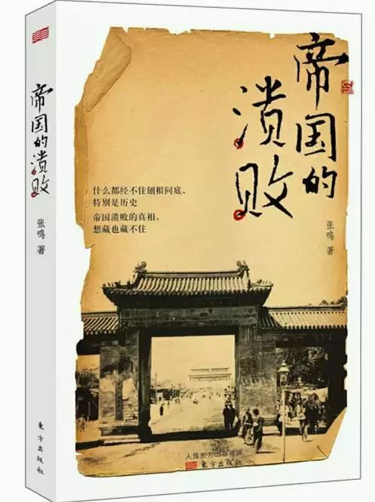
Fall of Qing Empire is a masterpiece of the history of Qing Dynasty. Pr. Zhang Ming, the world-renowned historian, analyzes the rise and fall of Qing Empire and explores the root causes with light and humorous words. His sharp insights are illuminating to those who want to probe into what’s behind the collapse of Qing Dynasty. Pr. Zhang Ming builds a new network to decode China’s modern history and connect fragmented historical events. Modern people can learn from this period and stay alert.
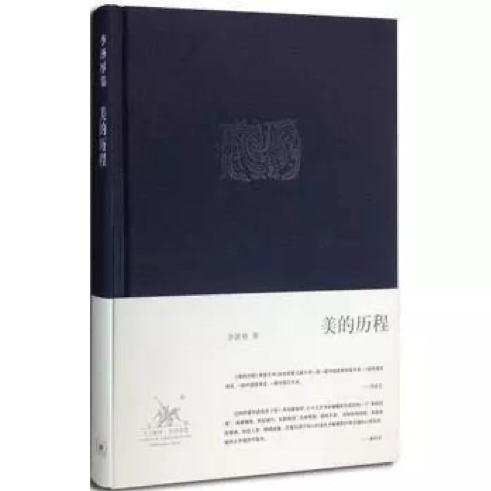
Li Zehou, a famous Chinese aesthetician, manages to put 5,000-year aesthetic history into the Evolution of Beauty from the ancient signs and splendid bronze vessels to the humanist paintings of Song and Yuan Dynasty and romantic portraits in Ming and Qing Dynasty. It is an informative and artist go-to-guide for China’s aesthetic evolution. The complicated but self-evident logics flows between the poetic words which depict a lucid and detailed picture about Chinese history and philosophy. This book enables readers to feel the beauty of Chinese civilization through the logical and illuminating words of Li Zehou.
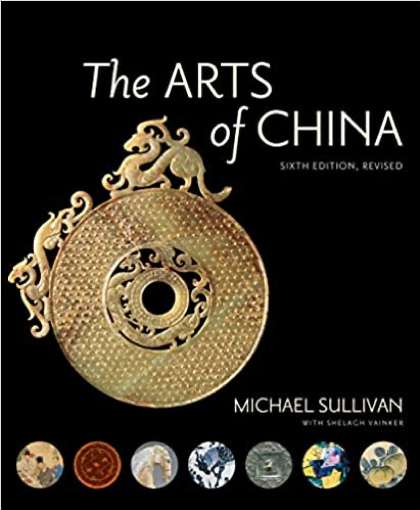
Written in the engaging and lucid style, The Arts of China is readily accessible to general readers as well as to serious students of art history. The awareness of beauty is as important as the sensitivity in investment. Sullivan expounds the beauty of Chinese art in a way the Chinese themselves view art, providing readers with a sense of history through China’s dynasties and improving their sense of beauty. The Arts of China will remain the most comprehensive and universal guide to the history of Chinese art.
Rewritten by: Luo Xinying, Edited by: Du Zhixin, Wei Yiyi
Over the past year, the bull market returned, with technology leading the way.
As I said back in October 2024, the rally that began on September 24 was not merely a rebound, but a reversal. Since then, China's capital markets have undergone a broad revaluation, moving from undervaluation toward fair value.
The Shanghai Composite Index reached its highest level in a decade. The "Yi-Zhong-Tian" trio—Eoptolink, Zhongji Innolight and TFC Communication, three prominent Chinese optical communications stocks—saw their share prices multiply severalfold in a single year. Cambricon's market capitalization briefly exceeded RMB 600 billion. Elsewhere in the technology sector, triple-digit price-to-earnings ratios and valuations exceeding RMB 10 billion became commonplace.
Some investors were greedy; others, fearful. Still others asked me: Are technology stocks in a valuation bubble?
My answer is that what we are witnessing is the hunger and anxiety of an era, reflected in the capital markets. Once you understand this, the current fervor for technology investing is no longer difficult to explain.
Investment has nothing to do with macroeconomics, but everything to do with geopolitics.
China-US relations will shape the investment landscape for decades to come. Geopolitics has played a major role in shaping the hunger and anxiety of our times, fundamentally reshaping the way we invest.
What, then, lies at the heart of China's hunger and anxiety?
The Fourth Industrial Revolution is already underway, yet China has not fully overcome the technological shortcomings left by the Third. There is no time to lose.
This is why some people wonder: Why do Chinese computing chip companies command such high valuations when their technologies still lag so far behind NVIDIA's? Why does NVIDIA trade at just 50 times earnings, while a company hailed as "China's answer to NVIDIA" commands a multiple of 300?
To me, this gets the logic exactly backward.
It is precisely because these companies cannot catch up with NVIDIA in the near term that they command a higher strategic premium. The wider the technological gap, the greater the strategic value.
The further something lies beyond our reach, the stronger our hunger. The harder it is to catch up, the deeper our anxiety. If China were to achieve a complete breakthrough in computing chips one day, valuations might actually come down.
Where can one find China's most spectacular natural landscapes?
Much of the answer, I believe, lies in and around the Hengduan Mountains: the Meili Snow Mountains, Jade Dragon Snow Mountain, Mount Gongga, Mount Siguniang, Jiuzhaigou, and many others. Vast differences in elevation and deep fault lines have given rise to landscapes of extraordinary grandeur.
Hard-tech investing follows a similar logic.
Technological gaps, discontinuities in capabilities, and missing links in industrial systems: a leap in difficulty brings a leap in valuation, and a successful breakthrough can, in turn, bring a leap in returns.
This logic extends well beyond computing chips. It is equally evident in memory semiconductors, commercial spaceflight, and other sectors where China still faces substantial technological gaps with other countries.
It was precisely this conviction that led CoStone Capital, starting in 2016, to decisively focus its investments on three areas: hard tech, emerging industries, and life sciences and healthcare. In this context, "hard tech" refers specifically to important industries in which China faces a technological gap with the United States.
Thanks to this forward-looking strategy, CoStone Capital established an early presence across the full value chains of key sectors, including semiconductors, artificial intelligence, and robotics.
Looking ahead, the frontiers of technological progress and industrial upgrading are boundless. Nor can the gaps in hard technology be closed overnight. The twin windows of opportunity presented by technological innovation and the development of homegrown alternatives to foreign technologies have only just begun to open.
The road ahead is long, but the future holds immense promise.
As an investment firm, CoStone Capital will continue to invest where the hunger and anxiety of each era run deepest, move forward with the tensions that shape our times, and extend our reach toward the most challenging—and most important—frontiers.
Spring 2026