


2019.05.09 CoStone Capital Views:
May 9, 2019
CoStone Annual Meeting 2019 with the theme of "Middlegame" kicked off at MGM Grand Sanya, Hainan on April 27. Nearly 300 economists, sociologists, management experts, CoStone Capital investors, representatives of CoStone network companies and elites from various circles attended the meeting.
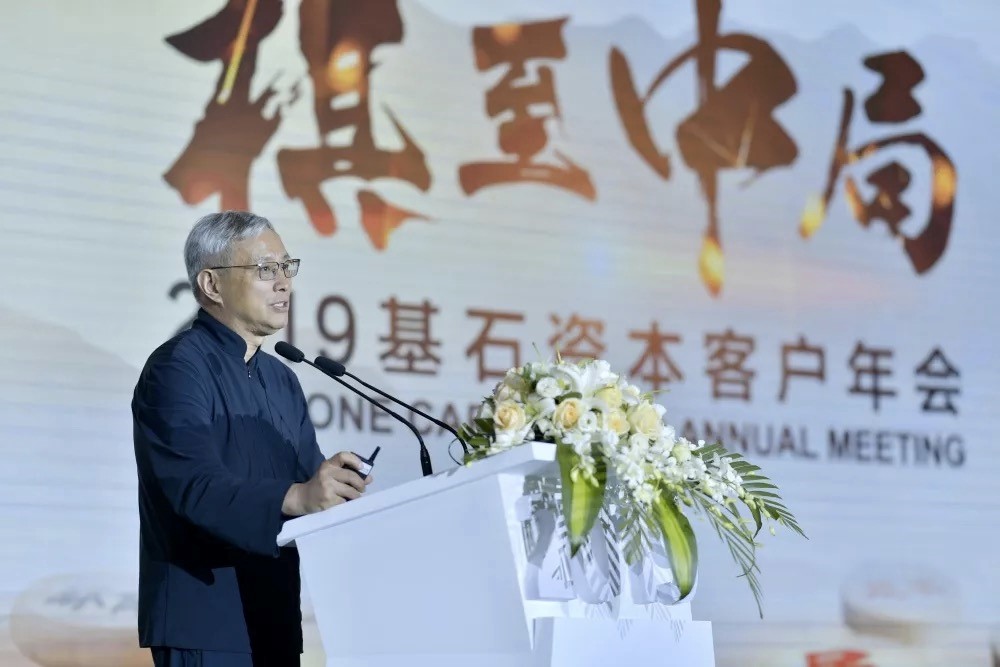
Prof. Zhou Qiren making a speech
Professor Zhou Qiren at the National School of Development, Peking University dived into the barriers to the Chinese economy, how China could break down the barriers, and the possibility of making successful breakthroughs.
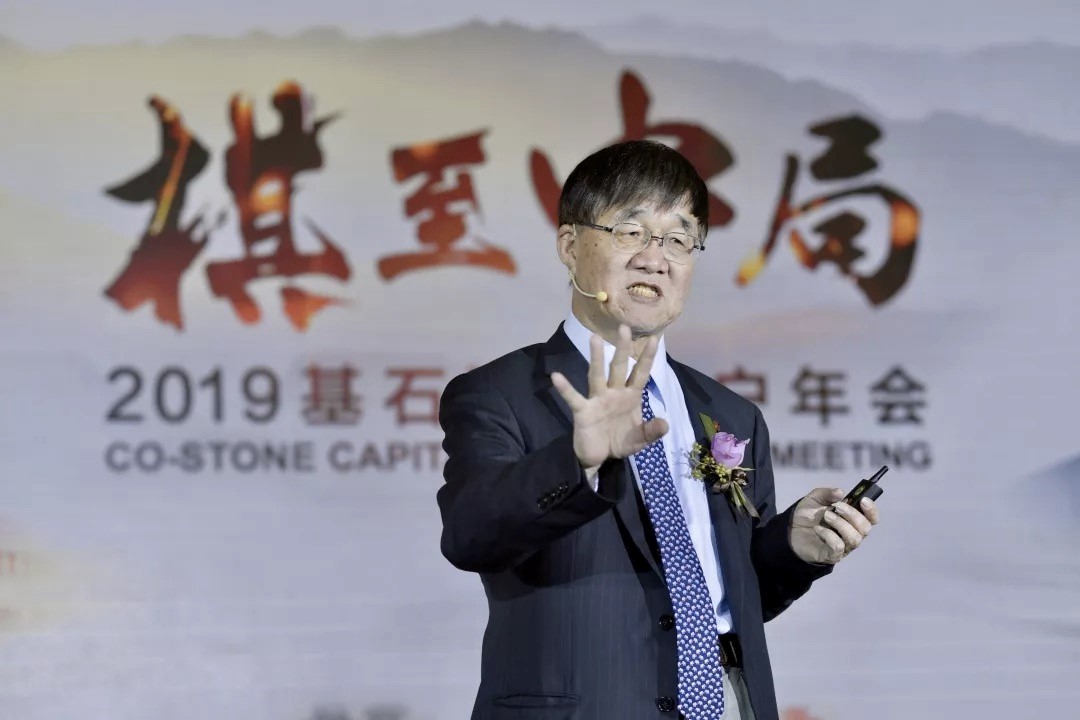
Professor Wei Sen on the Chinses Economy Undergoing a Great Transformation
Professor Wei Sen, Director of the Research Institute of Economic Thought and Economic History at Fudan University, is a famous expert in institutional economics. He also has extensive knowledge of philosophy and unique insights into China's economic, social and cultural transformation. His speech was about the Chinese economy undergoing a great transformation. Prof. Wei offered suggestions on further reform measures for sustainable growth in China. As he said, two macroeconomic policies have to be taken to tackle uncertainties: cutting taxes and powering private companies. And most importantly, China must continue the market-oriented reform and the building of a law-based market with determination.
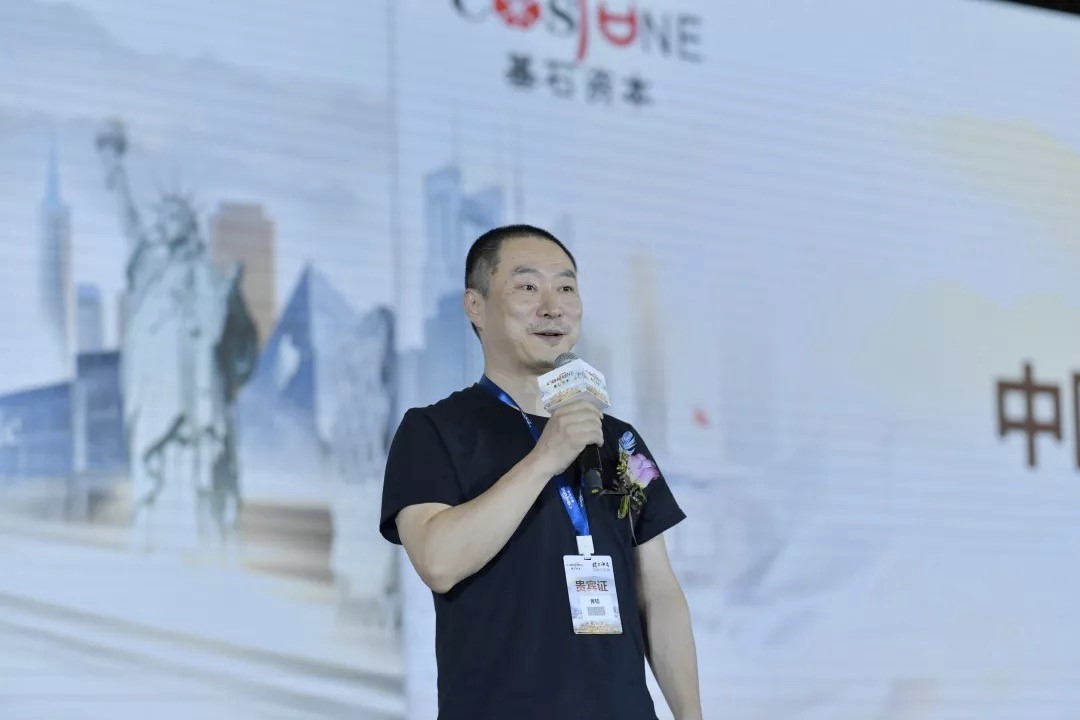
Huang Tao on Opportunities and Challenges of Chinese Brands
Huang Tao, Founder and Chairman of Lili&Beauty (605136.SH), has a deep understanding of brand building and development. After exploring the uniqueness and importance of the Chinese market, he presented the opportunities and challenges faced by Chinese brands, and proposed his solutions.
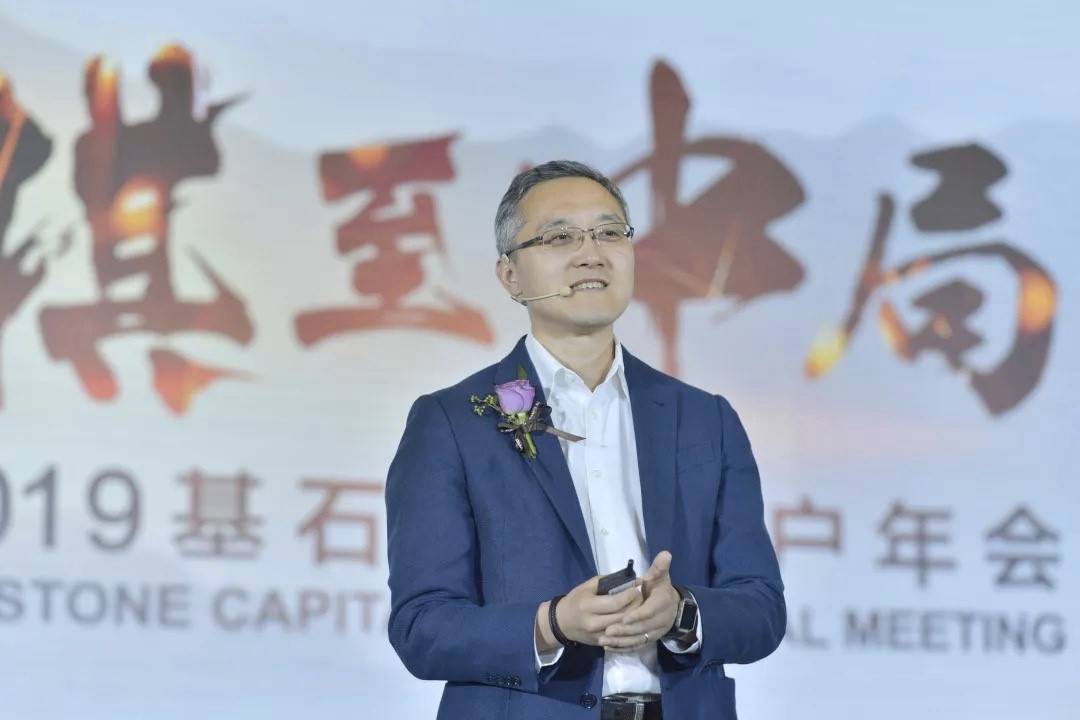
Zhang Haimeng on Improving the Organizational Power of Unicorns in the New Economy of China
Zhang Haimeng, Global Managing Partner of McKinsey & Company, talked about the organizational power of Chinese unicorns. He criticized that the lack of expertise could be fatal for unicorns seeking transformation and upgrading. To solve the problem at the root, their organizational power must be increased.
Speaker
Prof. Zhou Qiren
Zhou Qiren, a famous economist, is Professor of Economics and Former Dean of National School of Development at Peking University. He received his PhD degree from the University of California Los Angeles (UCLA). He served as a member of the Monetary Policy Committee of the People's Bank of China during 2010-2012. He is a member of the Expert Committee of National Development Planning for the 13th and 14th Five Year Plan, Member of Shanghai Decision-making Advisory Committee, and Member of Entrepreneur Advisory Meeting of Hainan Provincial Government. His research focuses on property rights and contracts, firms and market Organization, monetary and exchange rate, and reform and innovation. He has been rated as the "Most Popular Professor Among Students" at Peking University since 1997.
Prof. Wei Sen
Wei Sen is Professor in Economics and Director of the Research Institute of Economic Thought and Economic History at Fudan University. He was Deputy Dean of the School of Economics at the University for many years. He holds a bachelor's degree in Economics from Shandong University, a master's degree from the Australian National University, and a PhD in Economics from the University of Sydney. Prof. Wei has interests in the language of economics, ethics, anthropology, jurisprudence, and Austrian economics, particularly Hayek. He has published fifteen books and a range of articles in both Chinese and English. He also translated many English works of institutional economics, game theory, legal theory, and political sciences into Chinese. He is a columnist for the Wall Street Journal (Chinese), Financial Times (Chinese), and other leading media in China
Huang Tao
Huang Tao obtained his master's degree from the Department of Automation, Tsinghua University in 1998 after when he taught there for three years. He is Founder, Chairman and CEO of Lili&Beauty (605136.SH), a leading online retailer of cosmetics in China. Lili&Beauty has been authorized by more than 50 global brands including Sisley, Olenna, Erno Laszlo, Sulwhasoo, Laneige and Schwarzkopf to run Tmall flagship stores in China.
Zhang Haimeng
Haimeng Zhang is Global Managing Partner of McKinsey & Company. He co-leads McKinsey's Organization Practice in Asia, developing the talent and leadership that organizations need to thrive. He leads work across China on infrastructure, sustainability, and public-sector issues and works extensively with cities and major developers to plan and deliver integrated, sustainable urban developments.
Rewritten by: Jiang Xiaomei, Edited by: Du Zhixin, Wei Yiyi
Over the past year, the bull market returned, with technology leading the way.
As I said back in October 2024, the rally that began on September 24 was not merely a rebound, but a reversal. Since then, China's capital markets have undergone a broad revaluation, moving from undervaluation toward fair value.
The Shanghai Composite Index reached its highest level in a decade. The "Yi-Zhong-Tian" trio—Eoptolink, Zhongji Innolight and TFC Communication, three prominent Chinese optical communications stocks—saw their share prices multiply severalfold in a single year. Cambricon's market capitalization briefly exceeded RMB 600 billion. Elsewhere in the technology sector, triple-digit price-to-earnings ratios and valuations exceeding RMB 10 billion became commonplace.
Some investors were greedy; others, fearful. Still others asked me: Are technology stocks in a valuation bubble?
My answer is that what we are witnessing is the hunger and anxiety of an era, reflected in the capital markets. Once you understand this, the current fervor for technology investing is no longer difficult to explain.
Investment has nothing to do with macroeconomics, but everything to do with geopolitics.
China-US relations will shape the investment landscape for decades to come. Geopolitics has played a major role in shaping the hunger and anxiety of our times, fundamentally reshaping the way we invest.
What, then, lies at the heart of China's hunger and anxiety?
The Fourth Industrial Revolution is already underway, yet China has not fully overcome the technological shortcomings left by the Third. There is no time to lose.
This is why some people wonder: Why do Chinese computing chip companies command such high valuations when their technologies still lag so far behind NVIDIA's? Why does NVIDIA trade at just 50 times earnings, while a company hailed as "China's answer to NVIDIA" commands a multiple of 300?
To me, this gets the logic exactly backward.
It is precisely because these companies cannot catch up with NVIDIA in the near term that they command a higher strategic premium. The wider the technological gap, the greater the strategic value.
The further something lies beyond our reach, the stronger our hunger. The harder it is to catch up, the deeper our anxiety. If China were to achieve a complete breakthrough in computing chips one day, valuations might actually come down.
Where can one find China's most spectacular natural landscapes?
Much of the answer, I believe, lies in and around the Hengduan Mountains: the Meili Snow Mountains, Jade Dragon Snow Mountain, Mount Gongga, Mount Siguniang, Jiuzhaigou, and many others. Vast differences in elevation and deep fault lines have given rise to landscapes of extraordinary grandeur.
Hard-tech investing follows a similar logic.
Technological gaps, discontinuities in capabilities, and missing links in industrial systems: a leap in difficulty brings a leap in valuation, and a successful breakthrough can, in turn, bring a leap in returns.
This logic extends well beyond computing chips. It is equally evident in memory semiconductors, commercial spaceflight, and other sectors where China still faces substantial technological gaps with other countries.
It was precisely this conviction that led CoStone Capital, starting in 2016, to decisively focus its investments on three areas: hard tech, emerging industries, and life sciences and healthcare. In this context, "hard tech" refers specifically to important industries in which China faces a technological gap with the United States.
Thanks to this forward-looking strategy, CoStone Capital established an early presence across the full value chains of key sectors, including semiconductors, artificial intelligence, and robotics.
Looking ahead, the frontiers of technological progress and industrial upgrading are boundless. Nor can the gaps in hard technology be closed overnight. The twin windows of opportunity presented by technological innovation and the development of homegrown alternatives to foreign technologies have only just begun to open.
The road ahead is long, but the future holds immense promise.
As an investment firm, CoStone Capital will continue to invest where the hunger and anxiety of each era run deepest, move forward with the tensions that shape our times, and extend our reach toward the most challenging—and most important—frontiers.
Spring 2026