

2021.03.24 National Business Daily Views:
Zhang Wei said that Shenzhen has formed an "Iron Triangle" of "intensiveness"-capital intensive, talent and technologies intensive and large sci-tech enterprises intensive. The three aspects have constituted a self-powered eco-system in Shenzhen.
On August 26, 1980, Shenzhen became one of China's first four Special Economic Zones open to the outside world in China. Today, it has grown to be an international metropolis which has attracted the world's attention and created numerous miracles.
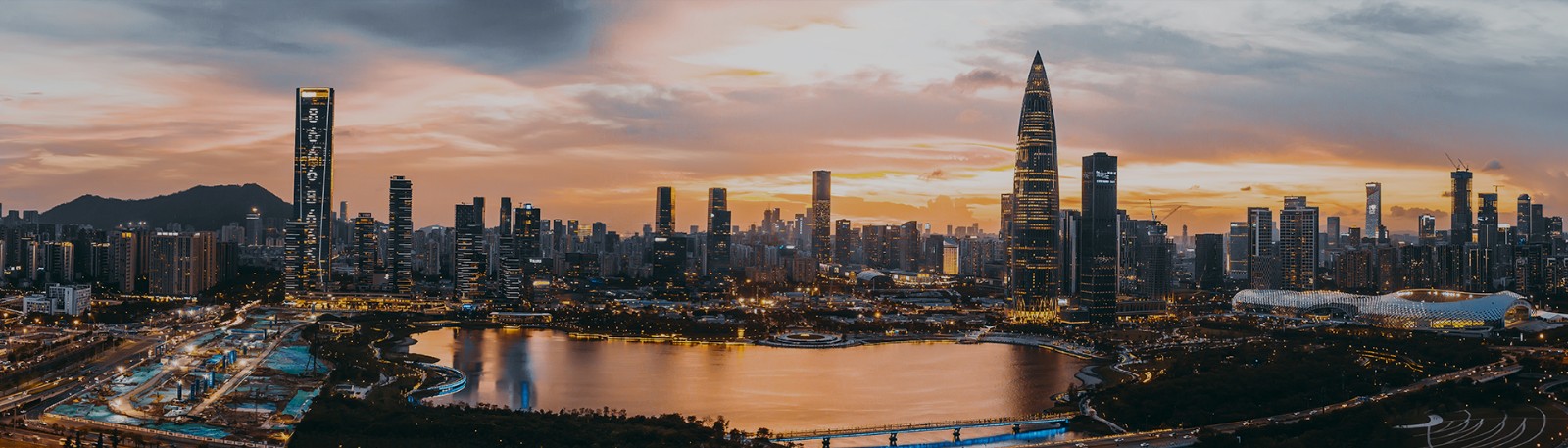
This year marks the 40th anniversary of the establishment of the Shenzhen Special Economic Zone. While looking back on the last four decades of Shenzhen, one may raise the following questions: What are the reasons for Shenzhen's success? What can other cities in China learn from Shenzhen? How can Shenzhen do better in the future?
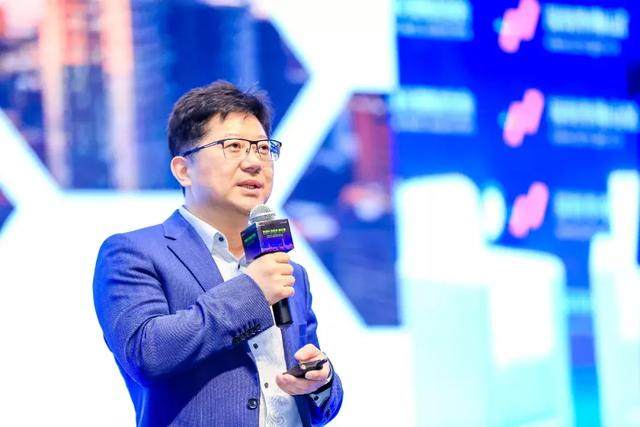
To answer these questions, National Business Daily had an interview with Zhang Wei, Chairman of CoStone Capital. Co-Stone Capital is a large PE institution, managing over 80 investment funds ranging from angels, VCs, PEs, buyouts, private placements, to private securities, with an AUM of more than ¥50b. As the co-founder of CoStone Capital, Zhang Wei offered us his insights on Shenzhen's development in detail.
Shenzhen's success owes to three unique advantages
Zhan Wei came to Shenzhen in 1994 after resigning from the government. "When I first came to Shenzhen, it was easy to get a job and I felt real freedom and liberation," said Zhan Wei. Among the people he met in Shenzhen, two types are typical: the divorced persons and the unrecognised talent.
"Many of my colleagues and neighbours were divorced. They were rebellious because few people had the courage to get a divorce in the early 1990s. Most people of my generation would not break a marriage even if they felt dissatisfied. I also met a lot of people whose talents were not recognized. Many of them left their powerful positions in the government and began to start a business. These two sorts of people were brave enough to jump out of their comfort zone. They were the first to throw themselves into the typical market economy in Shenzhen, a city with both geographical and policy advantages, and they became such a great source of energy."
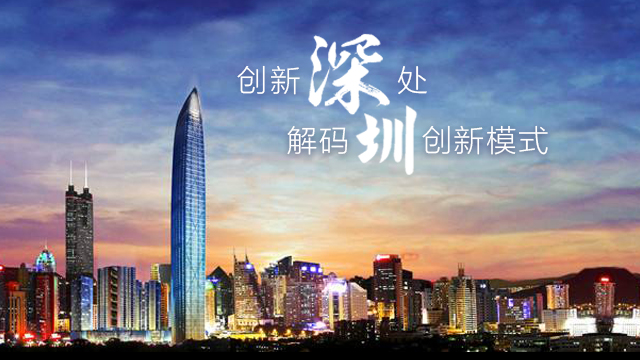
Shenzhen has created countless miracles. It is the cradle of many of China's best private enterprises, such as Huawei, Tencent, Ping An Insurance, DJI, and Mindray Bio-medical. Shenzhen's success lies in many aspects. In Zhang Wei's opinion, it owes to three unique advantages enjoyed by Shenzhen:
First, Shenzhen has a service-oriented government and a sound business environment. The government is transparent and efficient, and the businesses act in a pragmatic manner, as put by Zhang Wei. The social climate here differs from other cities in China. It leads to a virtuous cycle in which the government is willing to offer help to the enterprises and the latter thus have a good development, and vice versa.
Second, Shenzhen is highly market-oriented. For example, as of August 20, there were 315 companies listed on the A-share market in Shenzhen, and the number of private companies accounted for 71.4% of all the listed companies in Shenzhen, while the proportions of Beijing and Shanghai were much smaller, with only 55.8% and 48.3% respectively.
From an investor's standpoint, Zhan Wei also offered an example of Royole. As he said, Royole has grown up from a totally marketed-based environment. All its financing was market-based before the valuation hit ¥20b, which shows that Shenzhen and investment institutions are quite supportive of long-term key & core technology entrepreneurship.
Third, Shenzhen is an open and inclusive city of immigration. "Shenzhen took the lead in the reform and opening-up and has attracted immigrants from all over the country. It is a city of immigration and inclusiveness in the true sense. The potential of Shenzhen will remain great as long as people continue to talk of Shenzhen as a Chinese version of Silicon Valley instead of vice versa," Zhang Wei concluded.
Shenzhen should continue to strengthen its "Iron Triangle"
Zhang Wei said that Shenzhen has formed an "Iron Triangle" of "intensiveness"-capital intensive, talent and technologies intensive and large sci-tech enterprises intensive. The three aspects have constituted a self-powered eco-system in Shenzhen.
When talking about Shenzhen's future development, Zhang Wei mentioned the above "Iron Triangle" repeatedly and emphasized that Shenzhen should continue to strengthen it.
One of the methods is to attract more key & core technology enterprises to Shenzhen. These enterprises, especially the giant ones, represent the most advanced productive force. An eco-system with them at the centre is expected to take shape.
In addition, the government should improve the operation of guiding funds. Shenzhen used to launch a ¥100b government-guided fund, which has attracted excellent GPs and asset managers from across the country to Shenzhen. It has also brought in a large amount of capital from other regions, making Shenzhen a cornucopia of capital.
Another measure is providing preferential policies. "If plenty of outstanding enterprises have been attracted to Shenzhen, then will come massive capital, and finally Shenzhen will turn into a city abundant in talent and technologies. Therefore, Shenzhen should continue to strengthen the 'Iron Triangle' with supportive policies. The government should first put in place more open talent policies to gather high-quality human capital and then introduce preferential ones to get the best large tech enterprises to set up headerquarters in Shenzhen,' as explained by Zhang Wei.
Zhang Wei also reminded not to miss the Unicorns. He said that SenseTime was just an example. A few years ago, Shenzhen didn't realize that SenseTime would one day grow into an elephant and lost it to Shanghai at last. "We should learn from this lesson. Shenzhen must be far-sighted to pick out and keep these good start-ups. The government should offer them great support in office rent and tax."
As the manager of an investment institution, Zhang Wei reckons that PE can serve as a catalyst for the development of enterprises in Shenzhen. China's PE institutions still lag behind foreign ones such as Blackstone, Carlyle and KKR. However, with the rise of the economy and the industrial transformation, there will emerge some asset management institutions with global influence in China, which will in turn contribute to a better development of Chinese enterprises.
"Royole's example tells us what role investment institutions can play. It is these active market-based investment institutions that have enabled the high-tech enterprises to grow and get strong. They offer the enterprises precious capital and help them survive from numerous long-term processes of R&D, trial production and trial operation. We investors value two qualities of the enterprises most. The first one is the strategic focus. Such enterprises, with total concentration on their main business, will not move into other fields easily. No matter how the macro environment changes, they will only be dedicated to R&D and system building. Huawei is just a representative of them. The second is the entrepreneurial spirit. We had been advocating the entrepreneurial spirit even before it was incorporated into the government documents. Shenzhen boasts a great many entrepreneurs with such quality, including Ren Zhengfei, Pony Ma, Ma Mingzhe, Wang Shi, Wang Tao of DJI, Xu Hang and Li Xiting of Mindray Bio-medical," Zhang Wei said.
Rewritten by: Jiang Xiaomei, Edited by: Du Zhixin, Wei Yiyi
Over the past year, the bull market returned, with technology leading the way.
As I said back in October 2024, the rally that began on September 24 was not merely a rebound, but a reversal. Since then, China's capital markets have undergone a broad revaluation, moving from undervaluation toward fair value.
The Shanghai Composite Index reached its highest level in a decade. The "Yi-Zhong-Tian" trio—Eoptolink, Zhongji Innolight and TFC Communication, three prominent Chinese optical communications stocks—saw their share prices multiply severalfold in a single year. Cambricon's market capitalization briefly exceeded RMB 600 billion. Elsewhere in the technology sector, triple-digit price-to-earnings ratios and valuations exceeding RMB 10 billion became commonplace.
Some investors were greedy; others, fearful. Still others asked me: Are technology stocks in a valuation bubble?
My answer is that what we are witnessing is the hunger and anxiety of an era, reflected in the capital markets. Once you understand this, the current fervor for technology investing is no longer difficult to explain.
Investment has nothing to do with macroeconomics, but everything to do with geopolitics.
China-US relations will shape the investment landscape for decades to come. Geopolitics has played a major role in shaping the hunger and anxiety of our times, fundamentally reshaping the way we invest.
What, then, lies at the heart of China's hunger and anxiety?
The Fourth Industrial Revolution is already underway, yet China has not fully overcome the technological shortcomings left by the Third. There is no time to lose.
This is why some people wonder: Why do Chinese computing chip companies command such high valuations when their technologies still lag so far behind NVIDIA's? Why does NVIDIA trade at just 50 times earnings, while a company hailed as "China's answer to NVIDIA" commands a multiple of 300?
To me, this gets the logic exactly backward.
It is precisely because these companies cannot catch up with NVIDIA in the near term that they command a higher strategic premium. The wider the technological gap, the greater the strategic value.
The further something lies beyond our reach, the stronger our hunger. The harder it is to catch up, the deeper our anxiety. If China were to achieve a complete breakthrough in computing chips one day, valuations might actually come down.
Where can one find China's most spectacular natural landscapes?
Much of the answer, I believe, lies in and around the Hengduan Mountains: the Meili Snow Mountains, Jade Dragon Snow Mountain, Mount Gongga, Mount Siguniang, Jiuzhaigou, and many others. Vast differences in elevation and deep fault lines have given rise to landscapes of extraordinary grandeur.
Hard-tech investing follows a similar logic.
Technological gaps, discontinuities in capabilities, and missing links in industrial systems: a leap in difficulty brings a leap in valuation, and a successful breakthrough can, in turn, bring a leap in returns.
This logic extends well beyond computing chips. It is equally evident in memory semiconductors, commercial spaceflight, and other sectors where China still faces substantial technological gaps with other countries.
It was precisely this conviction that led CoStone Capital, starting in 2016, to decisively focus its investments on three areas: hard tech, emerging industries, and life sciences and healthcare. In this context, "hard tech" refers specifically to important industries in which China faces a technological gap with the United States.
Thanks to this forward-looking strategy, CoStone Capital established an early presence across the full value chains of key sectors, including semiconductors, artificial intelligence, and robotics.
Looking ahead, the frontiers of technological progress and industrial upgrading are boundless. Nor can the gaps in hard technology be closed overnight. The twin windows of opportunity presented by technological innovation and the development of homegrown alternatives to foreign technologies have only just begun to open.
The road ahead is long, but the future holds immense promise.
As an investment firm, CoStone Capital will continue to invest where the hunger and anxiety of each era run deepest, move forward with the tensions that shape our times, and extend our reach toward the most challenging—and most important—frontiers.
Spring 2026