


2013.04.02 CoStone Capital Views:
CoStone Annual Meeting 2013 took placeatthe Interlaken OCT Hotel,Shenzhen, Guangdong on March 30 and 31,2013.
April 1, 2013
With the theme of "Transformation", the meeting offered a platform for CoStone Capital's investors to discuss hot topics with experts in economics, sociology and management. Nearly 300 investors, representatives of CoStone network companies and elites from various circles attended the meeting.
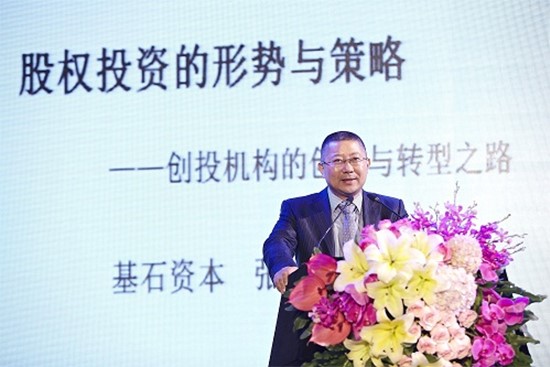
Zhang Wei on the Situation and Strategies of Equity Investment
At the meeting, Chairman Zhang Wei delivered a keynote speech on the situation and strategies of equity investment. He said, "CoStone Capital is optimistic about the long-term economic development of China. A dramatic plunge will not occur. The government has provided strong support for the social and economic development in China. Moreover, active private sectors also boast numerous investment opportunities." "The VC investment sector experienced great challenges in 2012. As the asset management industry is booming, VC investors need to develop more businesses and diversify their business modes and investment methods, so as to improve the service value chain and their risk resistance capacity and profitability," suggested Zhang Wei.
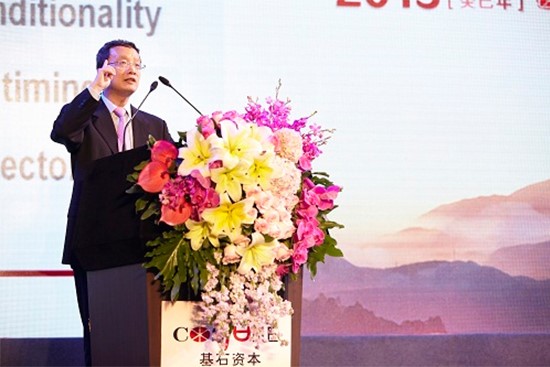
Dr. Tao Dong making a speech
The international and domestic macro-economic situation is one of the topics most concerned by people. Dr. Tao Dong, Managing Director and Vice Chairman of Credit Suisse Private Banking Asia Pacific, offered his insights into China's systematic reform, real estate market and industrial structure. As he pointed out, to increase productivity, China needs a structural and systematic reform, including allowing private capital to enter the service sector, and breaking up monopolies in the banking sector, eliminating the Hukou system, and activating the 500 million rural consumers.
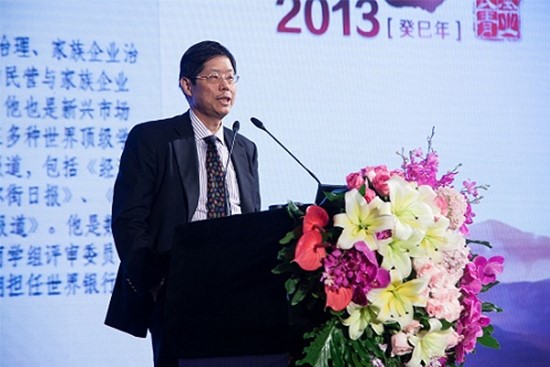
Prof. Joseph Fan making a speech
Professor Joseph Fan at the Chinese University of Hong Kong (CUHK) is an expert in the governance and inheritance of family businesses run by Chinese. He talked about the how to maintain the sustainable development of a family business. Based on the experience of Chinese family businesses in Southeast Asia and the West, Prof. Fan proposed new management modes other than the traditional one in which heirs to the family businesses have the ownership of special assets and professional managers are hired to manage them. He also explored the internal governance structure of family businesses from a unique perspective.
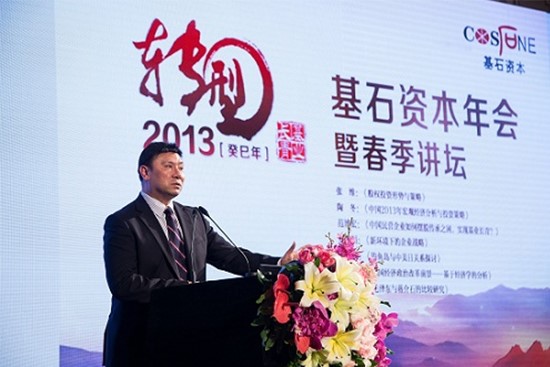
Prof. Terence Tsai making a speech
Prof. Terence Tsai at China Europe International Business School (CEIBS) proposed the strategies companies should adopt in the new context and offered suggestions for them on how to identify the key external influential factors. The issue of Chinese companies’ internationalization was also discussed in his speech.
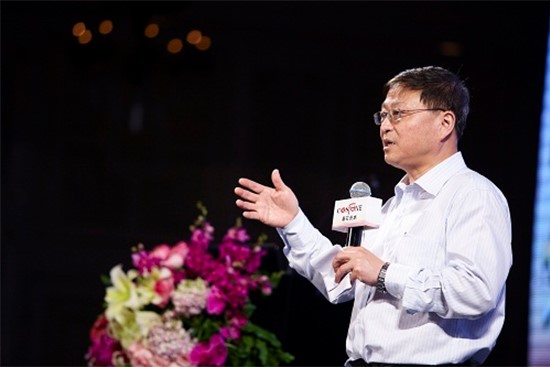
Prof. Yan Xuetong making a speech
The Sino-Japanese relations and the Diaoyu Islands dispute, which are of the public's concerns, have caused heated debates over the past two years. Professor Yan Xuetong, China's most renowned expert in international relations, shared his wisdom on the two issues.
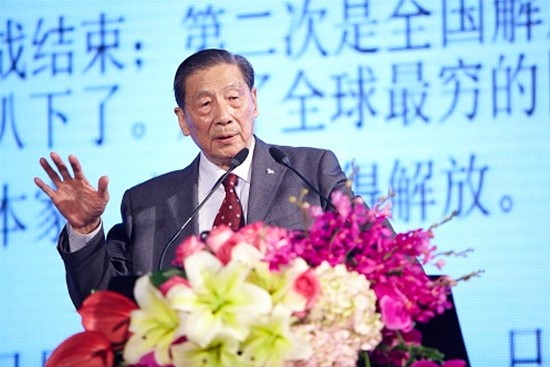
Mao Yushi making a speech
Mao Yushi, the winner of Milton Friedman Prize for Advancing Liberty, shared his research outcomes on China's economic prospects and government reforms at the meeting. As he pointed out, the past 30 years have been the prime period in modern China, but there remain a lot to be reformed. China needs to go on advancing social equity. Many attendees were inspired by his academic ideas.
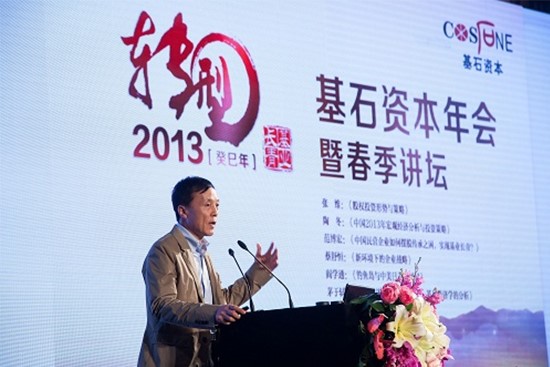
Prof. Yang Kuisong making a speech
Professor Yang Kuisong is a famous Chinese historian, with in-depth research on the history of the Communist Party of China, Sino-foreign relations and modern China. His comparative study of Chiang Kai-shek and Mao Zedong is quite refreshing. The two great men, traditionally viewed as enemies, are found with common features in many aspects in Prof. Yang's study.
Speaker
Dr. Tao Dong
Dr. Dong Tao, highly regarded by investors worldwide, is Managing Director and Vice Chairman of Credit Suisse Private Banking Asia Pacific. He has published more than ten books in his careers. Dr. Tao joined Credit Suisse in 1998 as Chief Regional Economist for Non-Japan Asia, with a focus on China. He moved from investment bank to private bank in July 2016. Prior to joining Credit Suisse, he was with Schroders Securities Asia as Senior Regional Economist and Head of China research. Dr. Tao holds a PhD degree and a master's degree from the University of Utah and a bachelor's degree from Beijing Foreign Language University. He worked in China, the US and Japan. He has been based in Hong Kong since 1994.
Prof. Joseph Fan
Joseph Fan is Professor of School of Accountancy and Department of Finance of CUHK. He holds a PhD in Finance from University of Pittsburgh, US, and a bachelor's degree in Economics from National Taiwan University. Before joining CUHK in 2004, he was on faculty of the Hong Kong University of Science and Technology and the University of Hong Kong.
Prof. Terence Tsai
Terence Tsai is Associate Professor of Management at CEIBS and PhD Supervisor at Shanghai Jiaotong University in China. He has also served as Visiting Professor of Management at National Taiwan University, Chang Gung University and Sun Yat-Sen University in Taiwan. Prior to joining CEIBS, he served as Acting Associate Dean (Graduate Studies), Director of Centre for Case Teaching and Research and Acting Director & Associate Director of MBA Programmes at CUHK. Dr. Tsai was also a full-time faculty member of Richard Ivey School of Business at the University of Western Ontario in Canada and Judge Business School at the University of Cambridge in England.
Prof. Yan Xuetong
Yan Xuetong is President of the Carnegie–Tsinghua Management Board and Dean of Tsinghua University's Institute of Modern International Relations. Prof. Yan is Editor-in-chief of the Chinese Journal of International Politics and serves as an adviser to several leading academic journals. He is Vice Chairman of both the China Association of International Relations Studies and the China Association of American Studies, and is a member of the Consultation Committee of China's Ministry of Commerce. He also serves on several boards, including those of the China Diplomacy Association and the China Association of Foreign Friendship. Prof. Yan has written several books, including Analysis of China's National Interests, winner of the 1998 China Book Prize, Ancient Chinese Thought, and Modern Chinese Power.
Prof. Mao Yushi
Prof. Mao Yushi is a Chinese economist. He graduated from Shanghai Jiao Tong University in 1950. He was a visiting scholar at Harvard University in 1986 and a senior lecturer at Queensland University in 1990.
Prof. Yang Kuisong
Prof. Yang Kuisong is a Chinese historian. His studies the history of the Chinese Communist Party. He is Professor of History at the East China Normal University, a researcher at the Si-Mian Institute for Advanced Study in Humanities. He also holds a position as a professor at Peking University. His research focuses on the history of modern China, the history of the Chinese Communist Party, Sino-Soviet relations, the relationship between the Kuomintang and the CPC, and the intellectual history of socialism.
Rewritten by: Jiang Xiaomei, Edited by: Du Zhixin, Li Yunzhen
Over the past year, the bull market returned, with technology leading the way.
As I said back in October 2024, the rally that began on September 24 was not merely a rebound, but a reversal. Since then, China's capital markets have undergone a broad revaluation, moving from undervaluation toward fair value.
The Shanghai Composite Index reached its highest level in a decade. The "Yi-Zhong-Tian" trio—Eoptolink, Zhongji Innolight and TFC Communication, three prominent Chinese optical communications stocks—saw their share prices multiply severalfold in a single year. Cambricon's market capitalization briefly exceeded RMB 600 billion. Elsewhere in the technology sector, triple-digit price-to-earnings ratios and valuations exceeding RMB 10 billion became commonplace.
Some investors were greedy; others, fearful. Still others asked me: Are technology stocks in a valuation bubble?
My answer is that what we are witnessing is the hunger and anxiety of an era, reflected in the capital markets. Once you understand this, the current fervor for technology investing is no longer difficult to explain.
Investment has nothing to do with macroeconomics, but everything to do with geopolitics.
China-US relations will shape the investment landscape for decades to come. Geopolitics has played a major role in shaping the hunger and anxiety of our times, fundamentally reshaping the way we invest.
What, then, lies at the heart of China's hunger and anxiety?
The Fourth Industrial Revolution is already underway, yet China has not fully overcome the technological shortcomings left by the Third. There is no time to lose.
This is why some people wonder: Why do Chinese computing chip companies command such high valuations when their technologies still lag so far behind NVIDIA's? Why does NVIDIA trade at just 50 times earnings, while a company hailed as "China's answer to NVIDIA" commands a multiple of 300?
To me, this gets the logic exactly backward.
It is precisely because these companies cannot catch up with NVIDIA in the near term that they command a higher strategic premium. The wider the technological gap, the greater the strategic value.
The further something lies beyond our reach, the stronger our hunger. The harder it is to catch up, the deeper our anxiety. If China were to achieve a complete breakthrough in computing chips one day, valuations might actually come down.
Where can one find China's most spectacular natural landscapes?
Much of the answer, I believe, lies in and around the Hengduan Mountains: the Meili Snow Mountains, Jade Dragon Snow Mountain, Mount Gongga, Mount Siguniang, Jiuzhaigou, and many others. Vast differences in elevation and deep fault lines have given rise to landscapes of extraordinary grandeur.
Hard-tech investing follows a similar logic.
Technological gaps, discontinuities in capabilities, and missing links in industrial systems: a leap in difficulty brings a leap in valuation, and a successful breakthrough can, in turn, bring a leap in returns.
This logic extends well beyond computing chips. It is equally evident in memory semiconductors, commercial spaceflight, and other sectors where China still faces substantial technological gaps with other countries.
It was precisely this conviction that led CoStone Capital, starting in 2016, to decisively focus its investments on three areas: hard tech, emerging industries, and life sciences and healthcare. In this context, "hard tech" refers specifically to important industries in which China faces a technological gap with the United States.
Thanks to this forward-looking strategy, CoStone Capital established an early presence across the full value chains of key sectors, including semiconductors, artificial intelligence, and robotics.
Looking ahead, the frontiers of technological progress and industrial upgrading are boundless. Nor can the gaps in hard technology be closed overnight. The twin windows of opportunity presented by technological innovation and the development of homegrown alternatives to foreign technologies have only just begun to open.
The road ahead is long, but the future holds immense promise.
As an investment firm, CoStone Capital will continue to invest where the hunger and anxiety of each era run deepest, move forward with the tensions that shape our times, and extend our reach toward the most challenging—and most important—frontiers.
Spring 2026