

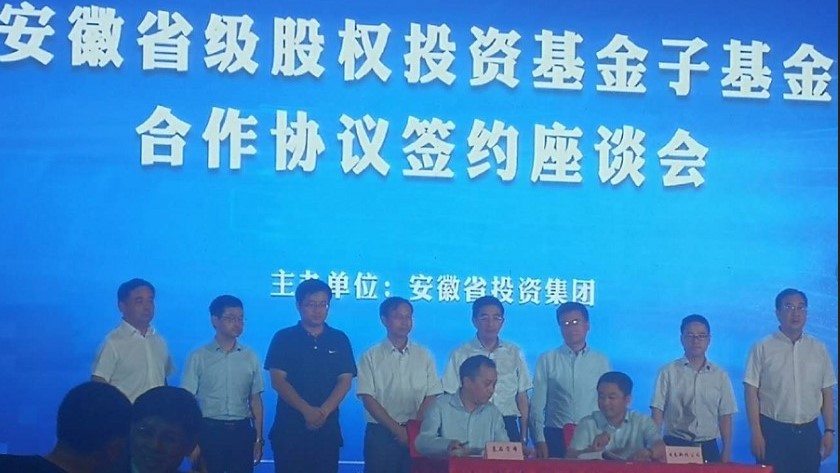
In the afternoon of July 2, Anhui PE Baby Fund cooperation agreement signing forum was held in Anhui Provincial Investment Group Holding Co.,LTD. Zhang Wei, chairman of CoStone Capital, and Han Zaiwu, managing partner, attended the signing forum, and CoStone Capital successfully inaugurated the Anhui intelligent manufacturing industrial fund as fund manager.
READ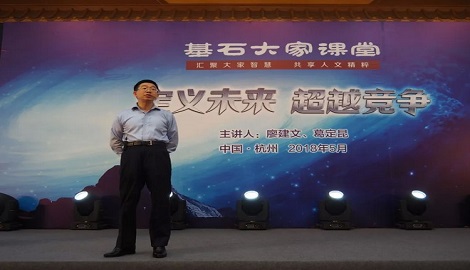
On May 21, the seventeenth CoStone Master Forum, which lasted for two days, was brought to a successful close in Hangzhou, Zhejiang. The theme was "Defining the Future and Surpassing Competition". Dr. Liao Jianwen, Chief Strategy Officer (CSO) of JD, and Dr. Ge Dingkun, Co-chairman of Techand Ecology & Environment and Former Professor at the China Europe International Business School (CEIBS), were invited to give lectures in the Forum.
READ
On May 18, the 6th China VC Summit, held by Securities Times, was held in Shenzhen, where the "Golden Eagle Award" and "New Seedling Award" of Chinese VC were presented. CoStone Capital was awarded as "The Best PE" of the year, "The Best Exit Institution" of the year, "The Best VC of the AI", "The Best VC of the Entertainment Industry" and many other honors. Its invested enterprises Such as Sense Time, Royole and Pagoda were awarded as the high-growth enterprises of the year, and its chairman Zhang Wei was awarded as the best investor of the year.
READ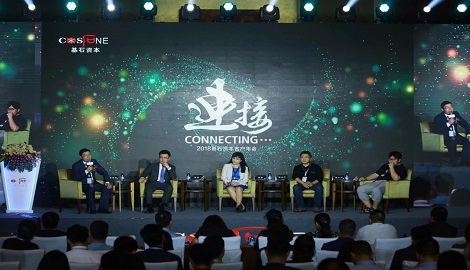
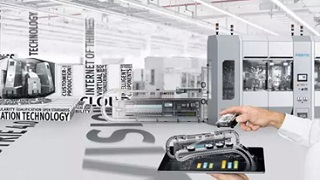
In Anhui Province, the PE fund has played an increasingly important role in raising the proportion of direct financing and boosting the healthy development of the multi-level capital market, thus becoming an important force to support the real economy. Attracted by Anhui’s sound industrial development environment, a domestic PE firm CoStone Capital comes to invest in Anhui. By connecting “capital and industrial resources”, it continuously enlarges the amount and scale of the investments to cultivate and support start-up companies. And that continues to yield results.
READ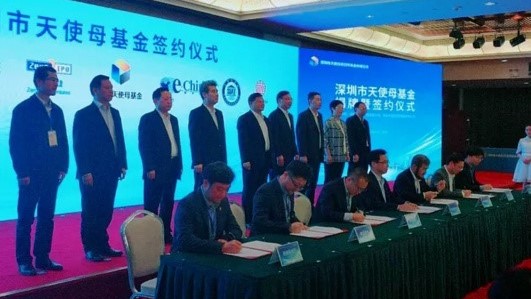
On the afternoon of March 24th, Shenzhen Angel Capital Guiding Fund was inaugurated and signed at Shenzhen Civic Center. CoStone Capital was successfully selected as one of the first Baby Fund management institutions, and Chairman Mr. Zhang Wei attended and participated in the signing ceremony.
READ
The auto industry is one of the few trillion-level markets, to which CoStone Capital has been paying close attention and making careful deployment.
READ
On March 16, CoStone Capital ¥680Mn of I&E issued by the SZSE for the record. The bond has a five-year maturity and the money raised will be used to support the real economy, with a focus on investing in innovative start-ups.
READ
On January 6 and 7, the sixteenth CoStone Master Forum witnessed informative talks on The Value of Life in Western Culture. Professor Xu Jilin at East China Normal University, Professor He Huaihong at Peking University, Professor Sun Xiangchen at Fudan University and Professor Wang Qingjie at the Chinese University of Hong Kong explored the topic deeply in the forum.
READ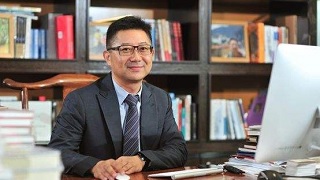
With CEO Zhang Wei’s unremitting efforts over the past 15 years, CoStone Capital has grown from nothing to the scale it has today, with more than 40 funds under management, a total worth of over 30 billion yuan. In the industry, CoStone Capital is known for “would rather make a focused investment than a micro one.” Among over 90 enterprises that were invested by CoStone during the past 15 years, only one of them had a loss of principal. Zhang Wei attributed his key of success to “good luck and supports from decent friends”.
READ
On December 8, Forbes China released its "Best Venture Capitalists in China" list, which aims to find the most successful fund investors in China with the ability to discover and manage funds and deliver substantial returns. Following the same principles, this year's list focuses on performance over the past five years, from 2013 to August 2017.
READOver the past year, the bull market returned, with technology leading the way.
As I said back in October 2024, the rally that began on September 24 was not merely a rebound, but a reversal. Since then, China's capital markets have undergone a broad revaluation, moving from undervaluation toward fair value.
The Shanghai Composite Index reached its highest level in a decade. The "Yi-Zhong-Tian" trio—Eoptolink, Zhongji Innolight and TFC Communication, three prominent Chinese optical communications stocks—saw their share prices multiply severalfold in a single year. Cambricon's market capitalization briefly exceeded RMB 600 billion. Elsewhere in the technology sector, triple-digit price-to-earnings ratios and valuations exceeding RMB 10 billion became commonplace.
Some investors were greedy; others, fearful. Still others asked me: Are technology stocks in a valuation bubble?
My answer is that what we are witnessing is the hunger and anxiety of an era, reflected in the capital markets. Once you understand this, the current fervor for technology investing is no longer difficult to explain.
Investment has nothing to do with macroeconomics, but everything to do with geopolitics.
China-US relations will shape the investment landscape for decades to come. Geopolitics has played a major role in shaping the hunger and anxiety of our times, fundamentally reshaping the way we invest.
What, then, lies at the heart of China's hunger and anxiety?
The Fourth Industrial Revolution is already underway, yet China has not fully overcome the technological shortcomings left by the Third. There is no time to lose.
This is why some people wonder: Why do Chinese computing chip companies command such high valuations when their technologies still lag so far behind NVIDIA's? Why does NVIDIA trade at just 50 times earnings, while a company hailed as "China's answer to NVIDIA" commands a multiple of 300?
To me, this gets the logic exactly backward.
It is precisely because these companies cannot catch up with NVIDIA in the near term that they command a higher strategic premium. The wider the technological gap, the greater the strategic value.
The further something lies beyond our reach, the stronger our hunger. The harder it is to catch up, the deeper our anxiety. If China were to achieve a complete breakthrough in computing chips one day, valuations might actually come down.
Where can one find China's most spectacular natural landscapes?
Much of the answer, I believe, lies in and around the Hengduan Mountains: the Meili Snow Mountains, Jade Dragon Snow Mountain, Mount Gongga, Mount Siguniang, Jiuzhaigou, and many others. Vast differences in elevation and deep fault lines have given rise to landscapes of extraordinary grandeur.
Hard-tech investing follows a similar logic.
Technological gaps, discontinuities in capabilities, and missing links in industrial systems: a leap in difficulty brings a leap in valuation, and a successful breakthrough can, in turn, bring a leap in returns.
This logic extends well beyond computing chips. It is equally evident in memory semiconductors, commercial spaceflight, and other sectors where China still faces substantial technological gaps with other countries.
It was precisely this conviction that led CoStone Capital, starting in 2016, to decisively focus its investments on three areas: hard tech, emerging industries, and life sciences and healthcare. In this context, "hard tech" refers specifically to important industries in which China faces a technological gap with the United States.
Thanks to this forward-looking strategy, CoStone Capital established an early presence across the full value chains of key sectors, including semiconductors, artificial intelligence, and robotics.
Looking ahead, the frontiers of technological progress and industrial upgrading are boundless. Nor can the gaps in hard technology be closed overnight. The twin windows of opportunity presented by technological innovation and the development of homegrown alternatives to foreign technologies have only just begun to open.
The road ahead is long, but the future holds immense promise.
As an investment firm, CoStone Capital will continue to invest where the hunger and anxiety of each era run deepest, move forward with the tensions that shape our times, and extend our reach toward the most challenging—and most important—frontiers.
Spring 2026